Author Archives: Tammy Falloon

Acer Palmatum Sangokaku

Japanese Maples

Japanese maples are the perfect choice of tree for any small, compact or courtyard garden. Their character and appeal makes them ideal for creating a focal point in your garden, brightening a shaded corner, or elegantly overhanging a pool or water feature.

Latin Name

Many acers are commonly called Japanese maples, but their parents could be derived from several different species including Acer japonicum, Acer palmatum, Acer shirasawanum or others. Among them are some extremely slow-growing forms, with trees remaining a small, manageable size without the need for regular pruning.

With their Eastern origins in Japan, Korea and China, these small trees are suitable for developing gardens with Oriental themes and designs, choosing other suitable planting partners for them, like ferns, hostas, bamboo, azaleas, camellias, and more.

Their natural shape and growing habit of branches make Japanese maples an ideal choice of small tree for gardens or growing in large patio pots. Their leaf shapes, sizes and colours vary immensely. Many have a broad palm shape, but these are often divided and dissected into the most delicate and intricate forms. Add to this their wide range of colours, from deep greens to yellow, gold, purple or even variegated patterns and you have immense variety to choose from.

While some green or purple-leaved varieties will tolerate an open position in full sun, this can scorch the more delicate foliage of golden, variegated or dissected forms. A sheltered site is more suitable, and particularly one that provides shade during the hottest part of the day and protection from drying winds.

All year round interest

Japanese maples put on a show right through the year, starting as soon as foliage unfurls in spring and continuing until their autumn transformation into shades of gold and bronze before they eventually fall.

Top Maples for any garden

To help you choose the best varieties with outstanding garden performance always look for ones that have received an Award of Garden Merit (AGM) from the Royal Horticultural Society. Here are some of our favourite AGM varieties:
Acer palmatum ‘Bloodgood’
Acer palmatum ‘Osakazuki’
Acer palmatum ‘Sango-Kaku’
Golden Shirasawanum maple (Acershirasawanum ‘Aureum’)

Top tips for growing Japanese Maples

1. Choose a sheltered site where trees are protected from late spring frosts, cold winds and scorching summer sun.
2. Maples prefer well-drained soil containing plenty of compost to lock in moisture and ensure the ground never dries out.
3. Spread a deep mulch of leaf-mould, compost or shredded bark over the soil around maples to retain moisture and reduce annual weed growth.
4. For growing in containers choose large and stable terracotta pots with several drainage holes in their base. Line pots with a sheet of plastic before filling with compost to reduce water loss through the sides.
5. As trees can remain in pots for several years it’s best to plant them using a loam-based John Innes No.3 compost with extra grit added to ensure good drainage. Do remember that established trees will need repotting into larger pots every few years.
6. Keep the top of the compost a few inches below the pot rim to make watering from above easier, covering the surface with a mulch of pebbles or ornamental gravel.
7. Water regularly with collected rainwater, and stand pots in saucers of water to provide a reservoir for trees to take up each day during hot, dry periods.
8. Tree roots can be susceptible to frost damage in winter, so either move pots to sheltered sites or wrap with bubble polythene insulation.

Other Japanese Maples that we grow

  • Acer japonicum ‘Eddisbury’ AGM
  • Acer japonicum ‘Altropurpureum’
  • Acer palmatum ‘Fireglow’
  • Acer palmatum ‘Crimson Queen’ AGM
  • Acer palmatum ‘Orange Dream’ AGM
  • Acer palmatum ‘Orangeola’ AGM
  • Acer palmatum ‘Shaina’
  • Acer palmatum ‘Skeeter’s Broom’
  • Acer palmatum ‘Trompenburg’ AGM

Planting partners for Japanese Maples

Try combining maples with other plants and features and ornaments to create areas with Oriental charm.  Japanese maples should not be smothered by neighbouring plants, so always give them space to flourish. Here are a few planting partners to consider:

  • Azalea
  • Bamboo
  • Camellia
  • Cornus kousa and others
  • Ferns
  • Flowering Cherries and Plums (Prunus varieties)
  • Holly (Ilex varieties)
  • Hydrangeas
  • Japanese laurel (Aucuba varieties)
  • Junipers and other conifers
  • Magnolias
  • Dwarf Pinus varieties
  • Rhododendron
  • Wisteria
  • Yew (Taxus varieties)

Both of our Exeter based garden centres sell the above listed varieties. Please call ahead to check availability before making a special journey.

April in the garden a colourful time

April in the garden

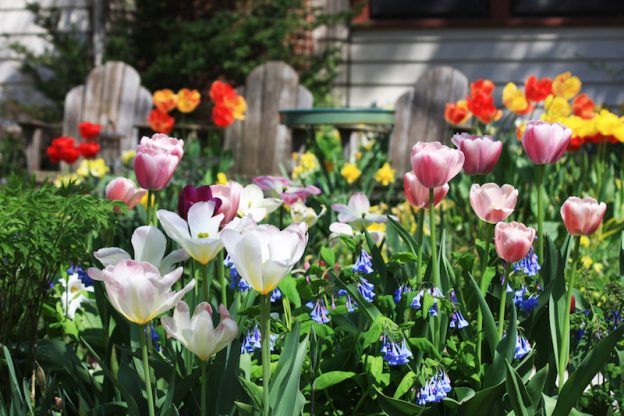
With so many plants coming back into life this month, it is a joyous month to be out in the garden. Here are our top tips for things to do in the garden this April.

April in the kitchen garden

Sow brassicas directly into the open ground in prepared seedbeds. Transplant to wider spacings in June.

Sow chard, coriander, beetroot, parsley and carrots in  cold greenhouse to plant out later.

Put tomato seedlings into individual pots when they have their first true leaves.

Finish planting shallot and onion sets plus seed grown onions.

April in the wildlife garden

Clean your birdbath and ensure they are regularly topped up with fresh water.

Create shelter for wildlife in hidden out of the way places, log, stick or rock piles are ideal.

Sow wildflower seeds. Annuals will give instant colour this summer or perennial mixes will give a longer term display.

April in the ornamental garden

Cut back Cotinus and Sambucus to encourage larger bolder leaves rather than flowers. The foliage interest is greatest when it contrasts with nearby finer foliaged plants.

Remove dead daffodil and tulip flowers but allow the leaves to die back naturally as you need them to fertilise the bulbs and encourage more flowers next year.

Direct sow annuals like Californian poppies, pot marigolds and sunflowers.

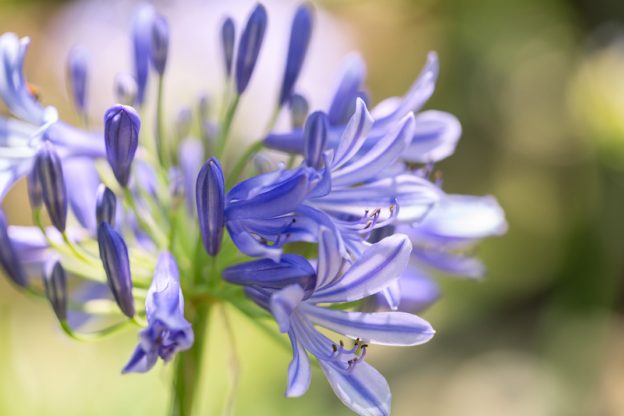
If you agapanthus are in pots and have started to reduce the amount of flowers compared to previous years then divide the clump and re plant.

Plant out autumn sown sweet pea plants or direct sow seeds outdoors.

Remove any dead plants that did not survive the winter and re-plant with new evergreen trees and shrubs.

April lawns

Repair hollows in the lawn by peeling back turf and adding or removing soil accordingly.

Apply a spring feed to the lawn. To save time use a combined product that feeds and weeds. After applying moss killer to lawns rake out blackened moss and thatch.

For all your seeds, plants, compost and pots visit one of our two Exeter based garden centres and have fun this April in the garden.

Blueberries are easy to grow

Grow blueberries in pots

Blueberries are bursting with superfood properties.

Blueberries are a good source of vitamin K. They also contain vitamin C, fibre, manganese and other antioxidants (notably anthocyanins). Valued for its high levels of antioxidants, some nutritionists believe that if you make only one change to your diet, it should be to add blueberries.

Die-hards claim blueberries can help protect against heart disease and some cancers, as well as improve your memory. If nothing else though, they taste yummy whether on their own or in blueberry muffins.

How to grow blueberries

Blueberries have only one request – an acidic soil. If you are unsure what pH your soil is and don’t want to buy a simple testing kit then plant blueberries in a pot using an ericaceous compost.

Many blueberries (latin name Vaccinium corymbosum) will grow successfully in pots although you may not get quite such a bumper crop as you would in the open ground.

Start off by buying a pot about an inch bigger than the one you buy your plant in. Then as it matures and you see roots at the base of your pot, gradually pot on. The final pot size should be 40-50cm (16-20 inches) across. Once at this size you will only need to re-pot every two or three years in late winter. When you are at this stage simply remove 20% of the old compost and roots and then re-plant in the same pot with fresh compost.

Watering and feeding

Water regularly in dry spells. Ideally use harvested rainwater from rain water butts. Feed monthly with an ericaceous liquid feed as per the instructions on the packet. Avoid overfeeding.

In winter, protect plants by moving the pots to a garage or cool shed when it is very cold outside or you can wrap your pot with bubble wrap to protect the roots form getting cold.

In spring you may need to protect flowers from late frosts by covering them in horticultural fleece.

In summer you may need to stop birds eating your berries by covering plants with fruit cage netting.

We think blueberries are a great addition to the garden, why not give them a go?


Winning the battle against Perennial Weeds

Perennial weeds are those pesky hard to kill weeds that die down in winter and re-emerge now in spring. They can be difficult to control and include weeds like bindweed, ground elder, nettles, Japanese knotweed and couch grass. The best time to tackle these weeds is in spring and summer while they are actively growing.

Combining several of our eradication techniques should ensure good weed control and minimal regrowth.

Eradication methods

Barriers

Barriers whether laid vertically or horizontally physically block the speed of weeds. Vertical barriers include edging boards and upended paving slabs whilst horizontal barriers include laying a permeable weed-suppressant fabric (available from our garden centres) over a cultivated and prepared area. You plant through the membrane making a cross cut in the fabric to allow you to sink the plant through. Late winter and early spring is the time to do this before the weeds start to grow.

This technique is effective against the growth of grass in your borders ad suppressing regrowth of old weeds. Vertical barriers are great to stop the spread of weeds from or to a neighbouring plot.

Digging them up

Without a doubt this sone of the most effective control methods providing you avoid breaking roots and or rhizomes when you dig. Use a hand fork or weeding tool to make the job lighter work. If you have to cover a large area then this can be hard work.

Mulches

Mulches help suppress annual weeds like dandelions as well as improve your soil texture and moisture levels, Plus they can encourage beneficial soil organisms. Clear your area first (hoe the ground) then apply a thick mulch of wood bark or chips. The mulch should be 10-15cm deep ideally (4-6 inches).

Weedkillers

Synthetic weedkillers are divided into three groups…

a) Unselective – these kill anything green. Some are persistent and remain active in the ground for months. Chemicals like this should not be used on edible crops so always read the label before you buy to check it is correct for your home and lifestyle.

b) Selective – these kill a specific type of weed e.g. broadleaved weeds in lawns.

c) Systemic – the weedkiller gets through to the root as well as the leaves. The do not persist ion the soil but are toxic so again should not be used on edible crops.

All the above are best applied when temperatures are warm and weeds are actively growing.

Organic weedkillers tackle weeds quickly and effectively. Whilst they may not be as potent as systemic chemical based ones, they do mean that you don’t have to worry about children or animals. We sell the Neudorff range of organic treatments as we feel they are effective and safe.

Other methods

Heat is effective at killing weeds whether you pour water from pots after you have cooked your vegetables or soil a kettle to buying specially designed heat wand guns (that use gas or paraffin). Results can be quite slow and they do tend not to last that long as some of our other techniques.

Scraping the weeds from cracks in paving is effective but you may find yourself repeating the exercise several times and therefore may want to consider a weedkiller instead.

Leave them be

To give a balanced view on weeds, we must not forget that many weeds are actually beneficial and sought after by wildlife. If you can afford to let an area go a bit wild then do. Stinging nettles alone have been proven to support over 40 different kinds of insects! Nettles are also a magnet for other insect-eaters like hedgehogs, shrews, frogs and toads, at all times of year.

However you want your garden to look, our Exeter based garden centres have the tools for the job!


Feed your lawn

April is probably the first month of the year when you can really start giving your lawn some TLC again. It is the best month to apply weed and moss killer and the time to apply the first fertiliser of the year.

When to feed

If you really want a lawn worthy of Wembley or Wimbledon then you need to feed your lawn four times a year during the growing season and we suggest this is done in April, June, August and October. Most people however just do the important spring feed and maybe a final autumn feed in October.


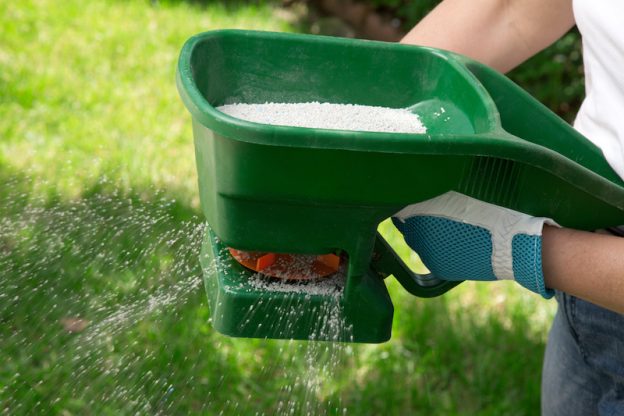
Depending on the size of your lawn you can either use a handheld applicator (as pictured) or we have a push along one you can hire from us. Both of these scatter the granular fertiliser. You can buy your weed or moss treatment separately or the most time friendly option is to buy a 3-in-1 product.

Both our garden centres have these treatments in their lawn care section. Please ask a member of staff for assistance in choosing the right product for your garden.

Want to start again

If you have patches of your lawn that are so tired or diseased, you may wish to consider sowing some new grass seed or some rolls of turf. If you do sow grass seed, don’t apply a fertiliser as the product may scorch the seed and fresh new roots.

We receive turf weekly on a Friday during the lawn growing season. Please call in advance to check we have stock before you make a special journey.


Plant Summer Flowering Bulbs

Now spring is here and the soil is starting to warm up, you can plant summer flowering bulbs like Alliums, agapanthus and canna lilies. What is even better is that we have just reduced the price on all our summer flowering bulbs by 30%!

How to plant summer flowering bulbs

When you buy flowering bulbs, there should be a description or small drawing to indicate how deep and how far apart you should plant each bulb. If not, use the bulb as a guide and plant it two or three times its depth and use the same gap as widths apart from each other.

Whilst you are thinking of bulbs…

if you already have spring flowering bulbs in your garden, a little bit of Care now will pay great rewards next year. Deadhead daffodils and narcissi by snipping off the dead flower heads before they can go to seed. Give them a liquid feed or a sprinkling of bonemeal and then let the leaves die down naturally. This ensures that all energy and nutrients go to the bulb to give it energy and encouragement to naturalise and bloom well next year.

First and Second Earlies, Plant Your Potatoes Now

First and second early potatoes can be planted now we are in April. Then in another couple to three weeks time you can plant main crop varieties such as King Edward.

How to plant potatoes

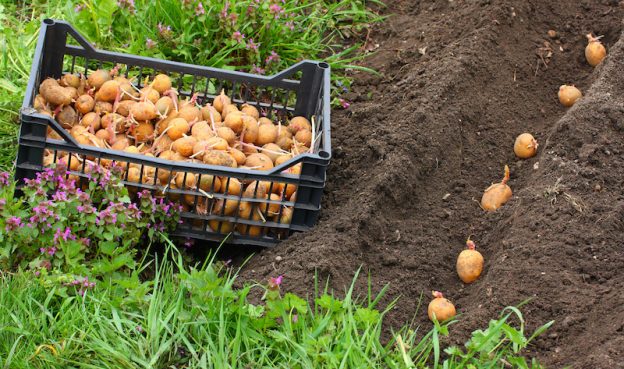
Hopefully you have already chitted your potatoes (Started them shooting in a dry indoor location) if not put a seed potato in each section of an egg box with the eyes up and store somewhere with natural light. Once they have begun to shoot they are ready for planting.

Start by digging a trench 7.5-13cm (3-5in) deep, although the exact depth should vary according to the variety of potato you’re planting so read the packet label.
Add a light sprinkling of potato fertiliser to your trench before you begin planting, available from our garden centres.
Plant early potatoes about 30cm (12in) apart with 40-50cm (16-20in) between the rows, and second earlies and maincrops about 38cm (15in) apart with 75cm (30in) between the rows.
Gently place the chitted potatoes into the trench with the shoots pointing upwards, being careful not to break the shoots. Cover the potatoes lightly with soil.
As soon as the shoots appear above the soil again, cover them up with more soil. Repeat this process as regular intervals so that by the end of the season you have a ridge about 30cm tall and wide.

Planting potatoes in pots

If you don’t have enough space to plant potatoes in trenches then you can grow them in pots as long as the pots are at least 25cm in diameter. We also sell specialist potato growing sacks. Simply half fill the pot, bury one seed potato below the surface and as the shoot appears keep covering it up with more soil until your pot is full.

We still have some varieties of seed potatoes, onion and garlic sets available to buy in our Exeter based garden centres. Don’t forget to ask one of our team if you are still unsure about planting. It really isn’t easy and you’ll love the taste of your home grown spuds!


Check for Wind Damage

Wind damage? Time to check the garden

Now that we’ve seen the back of Storm Doris, it’s a good time to get out into the garden and check for wind damage. Secure climbers if necessary and if any newly planted trees have moved then re-plant and stake them.

Prune and support

Look up into tree canopies and check for any wind damaged branches that may have snapped but not fallen. Remove them from their base with a clean less jagged cut.

If you are planting new fruit trees or bushes we would suggest you cane them as soon as possible.

Finally we recommend you give your lawn a quick inspection, many small branches may have blown onto your lawn and it will soon be time to give grass its first cut of the year and the last thing you will want to do is make your mowers blades blunt or brake.

Hard to find plants

Each year the Royal Horticultural Society (RHS) collects data from horticultural nurseries across the UK in order to compile their annual Plant Finder Book and web service. Available to everyone, this fantastic service can help you find any plant.

Some plants are harder to find than others and what makes St Bridget Nurseries extra special is that we stock 31 varieties of these hard to find plants. According to the latest plant finder, we are the only supplier of the following plants:

Acacia Exeter Hybrid Potentilla fruticosa var. veitchii
Calluna vulgaris ’C.W. Nix’ Prunus cerasifera ’Woodii’
Calluna vulgaris ’Orange Queen’ Pyracantha Dart’s Red
Camellia sasanqua ’Fukuzutsumi’ Rhododendron ’Ambrosia’
Campanula punctata f. rubriflora ’Vienna Festival’ Rhododendron ’Gog’
Erica cinerea f. aureifolia ’Apricot Charm’ Rhododendron ’Goldsworth Yellow’
Erica tetralix ’Silver Bells’ Rosa Apricot Sunblaze
Euonymus fortunei ’Prince John’ Rosa ’Blesma Soul’
Euonymus japonicus ’Maiden’s Gold’ Rosa Cherry Brandy
Fuchsia ’Candy Bells’ Rosa City Lights
Hebe ’Prostrata’ Rosa Courvoisier 
Juniperus taxifolia Rosa Lady Penelope
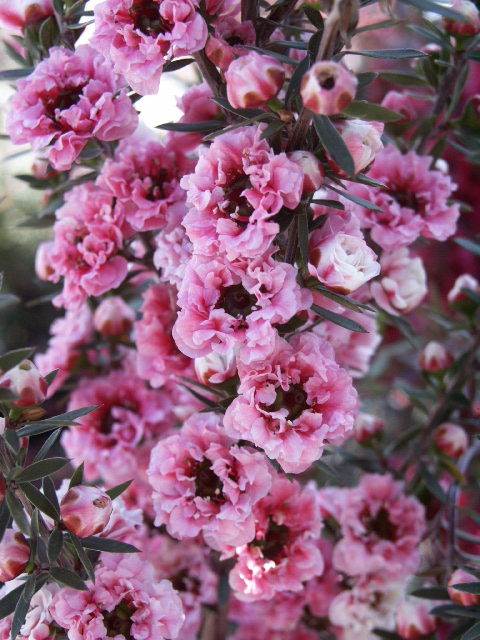
Leptospermum scoparium ’Crimson Glory’ Rosa Saint Boniface
Leptospermum scoparium ’Gaiety Girl’ Rosa Sweet Fairy
Passiflora caerulea rubra Rosa White Gold
Pieris japonica ’Temple Bells’ Rosa Yellow Sunblaze
Polystichum setiferum plumosum Group dwarf  

Colourful clematis

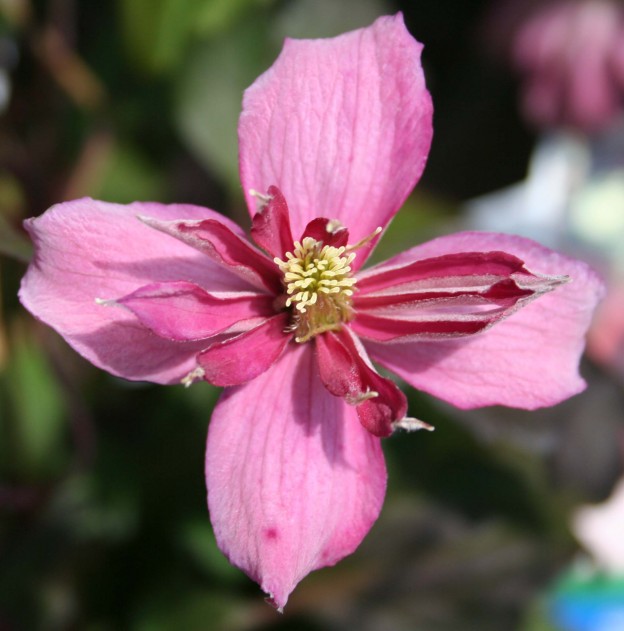
From bold blooms the size of tea saucers to delicate nodding bells on a garden arch, colourful clematis are versatile climbers that your garden needs!

Large-flowered hybrids are some of the most impressive visually, coming into their own during the summer months. Colours and forms vary widely, with something to suit every colour scheme. Most enjoy their heads in the sun, but some, like pure white ‘Alabast’, will also grow in semi-shade.

Don’t feel obliged to provide a structure or trellis for support as many clematis can simply be planted in amongst shrubs and left to grow up through them for support. Some of the best suited for this are varieties of Clematis viticella, like rich-red ‘Madame Julia Correvon’ whose summer flowers are followed by fluffy seed-heads.

You can also grow clematis in large pots to create a focal point on your patio. Use compact varieties to grow in containers, trained up an ornamental obelisk or wigwam of canes. Several new dwarf and compact varieties have been introduced in recent years too, ideal for planting in tall pots and left to trail over the edges.

Clematis are often partnered with climbing roses and honeysuckle up pillars and pergolas to create long-lasting flower displays, but vibrant combinations can be created with virtually any other climbers or wall shrubs.

It’s not hard to see why clematis have such irresistible charm, and with so many inspiring ways to include them within the garden and patio your colourful clematis collection is guaranteed to grow!


TOP TIPS ON GROWING CLEMATIS

  1. Clematis like their heads in the sun and feet in the shade. Plant so that the soil around the roots is shaded to keep it cool, training shoots up into a brighter, lighter space above.
  2. Always plant summer-flowering clematis deeper than they were growing in their pots. Dig a deep hole so the top of the rootball sits about 7-10cm below the soil surface, and bury the base of the stems with soil. This can help plants regrow if they ever suffer from clematis wilt disease.
  3. Spread a deep mulch of compost or bark over the soil after planting to lock in moisture and protect from the sun to keep roots cool.
  4. All clematis belong to one of three pruning groups depending on when they flower. Talk to our experts to find out which pruning group your clematis belongs to and get advice on exactly when and how to prune.

Both our garden centres stock a delightful assortment of clematis varieties so pop in to see which ones suit your garden.