Author Archives: Tammy Falloon

Pests and disease control

Getting ahead with pests and disease control

There are more and more pests and disease around our gardens. Therefore it is important to not only take preventative measures but also actively identify and combat problems as soon as possible.

Prevention is better than cure

On a preventative level it is important to check plants before you buy> You can even monitor them for a few days before planting out. Whilst any good nursery will check its stock before selling plants, from time to time even the experts can be caught out . Luckily for really bad and sinister diseases there are lots of rules and regulations on the transport of plants. In fact plants even have to have a passport if being exported/imported! At St Bridget Nurseries we follow stringent internal quality checks and our nursery is inspected annually by DEFRA. Currently there is a great concern in the industry about a disease called xylella fastidiosa which is a very harmful bacterial plant disease. There have been recent severe outbreaks in Europe and Britain is on high alert.

The importance of local growing

Because we grow nearly 85% of the plants we sell, we keep things local and fresh giving you the confidence of receiving high quality plants that have not been shipped from abroad.

The benefits of having your plants grown locally are numerous. Firstly, they are likely to thrive when you take them from us as they have been grown in the local conditions and are therefore acclimatised to the local climate. Secondly,(with regard to disease) because we nurture our plants right from seeds, they absorb many vital nutrients and become stronger and therefore more resistant to disease. Finally, there is of course no concern about foreign pests.

Avoiding spreading disease

Most pests and diseases you will find on your plants though are most likely already in your garden. Some great tips to try and avoid spreading diseases are as follows;

  • -keep up good garden hygiene by cleaning tools
  • -using disinfectant
  • -covering water
  • -dealing with garden waste appropriately
  •  -prune in dry weather
  •  -mulch around plants such as strawberries to deter pests and keep leaves and fruit away from soil.
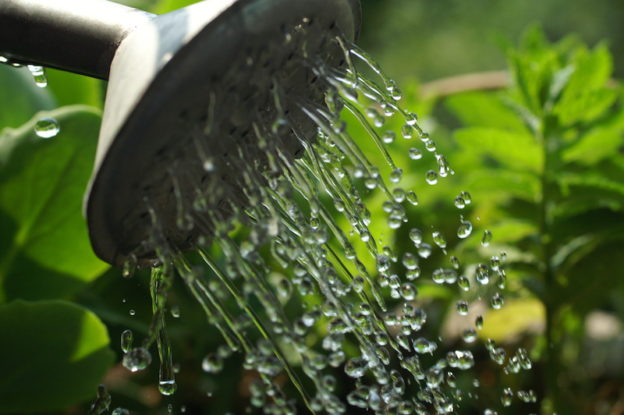
  • -try to avoid watering overhead when possible, always try to aim your water onto the soil surrounding your plant.

Following all of these tips will be great for disease prevention. However it is equally important to be able to identify problems by regularly checking and watching the health of your plants. It is also helpful to know the symptoms of disease.

Our garden centres have a wide range of control methods including chemical, organic and mechanical options.  Please ask our friendly team for advice on the options that are availably to you.
Garden checklist

General garden checklist for May

We know it’s hard to keep on top of everything, especially when there is so much to do. To kick start a prosperous growing season this summer, we have compiled a handy garden checklist, full of tasks to get you going. Why not print it off and try to complete these little tasks throughout the month of May? Read up on our other blog posts for why and how to do many of these jobs.

Garden Checklist

⃝ Hoe off and hand weed frequently to stay on top of weed growth. Weed prevention is   better than cure so consider installing weed poof membranes and mulches to your borders.

⃝ Feed your lawn with a spring feed fertiliser.

⃝ Mow your lawn weekly and start to gradually reduce the height of the blades with each cut.

Prune early-flowering plants to promote next year’s growth.

⃝ Begin sowing any outdoor herbs that you will be growing as annuals.

⃝ Plant hanging baskets for summer, our centres are bulging with suitable pot and basket plants.

⃝ Plant summer bedding, make sure to harden off more tender summer annuals first and add slow release fertiliser when you plant out for best results

⃝ Don’t let cool temperatures fool you, regular watering is always necessary for new plants. Most pots dry out from wind/air flow.

⃝ Planting strawberries? Place straw under the plant to prevent contact with the damp soil leading to rotten fruits

⃝ If you are growing tall growing plants be sure to put supports in place before the plants grow too tall

⃝ Harvest fully grown rhubarb by pulling the stalks, take care not to harvest more than half at any time

⃝ Start harvesting any fully grown asparagus

⃝ Check for early aphids and begin pest control, think about insect mesh and slug and snail control for particularly vulnerable varieties.

⃝ Check for nesting birds before trimming and pruning hedges

⃝ Put up bird boxes for summer migrants to nest in

⃝ Top up birdfeeders to support tired bird parents whilst they feed their young.

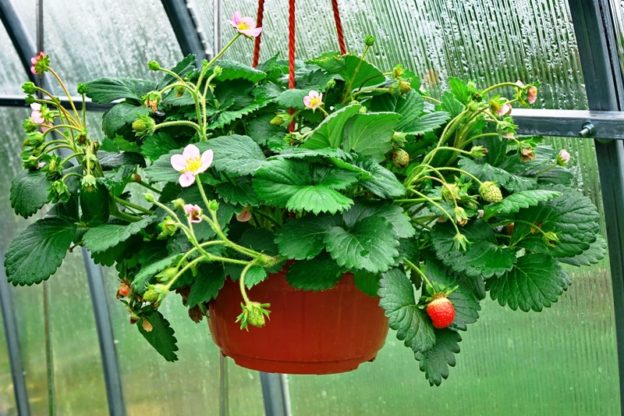
Strawberries being grown in a hanging basket.

Strawberries in hanging baskets

Switching it up with your strawberries

Strawberries make the perfect summer fruit and are one of the most versatile crops. Now you don’t even need a kitchen garden to grow them in!

Hanging Baskets 

Juciy, red, homegrown strawberries.

Strawberries are a tasty summer favourite and can be grown in several different ways!

This season how about growing your strawberries in a hanging basket? With the fruits growing over the edges, they look great and the fact they will have plenty of air circulating around them eliminates the likelihood of mould and mildew occurring. Additionally, because they are off the ground, they are completely safe from the wrath of slugs and snails.  If you don’t want to reach for the heights, strawberries will grow brilliantly in terracotta pots or even in window troughs.

Top Tips

Our tips for growing strawberries in containers are;

  • – keep them well fed and watered.
  • – don’t worry about the lack of soil, it isn’t a problem as strawberries only have shallow roots.
  • -whilst feeding and watering we recommend trying to keep water away from the leaves to avoid fungal diseases.
  • – try this popular feeding trick- to use a liquid tomato feed (like Tomorite) every couple of weeks once the strawberries have begun to flower. This works well due to the high potash content in the feed.
  • – hang your baskets or place your pots in a sunny spot which is ideal to encourage the swelling and ripening of fruits.

Strawberry Varieties

With 7 different varieties being grown here at St Bridget Nurseries, all with different qualities such as yield size, harvest times, disease resistance, flavour and plant shape. There will inevitably be one to suit your garden needs. Speak to our experts if you need more information about the specifics of each variety of strawberry!

Other ‘edible baskets’

If you love this hanging basket idea, it is also adaptable to tumbling tomatoes, chillies,  cut and come again salad and herbs! What will your next edible basket contain?

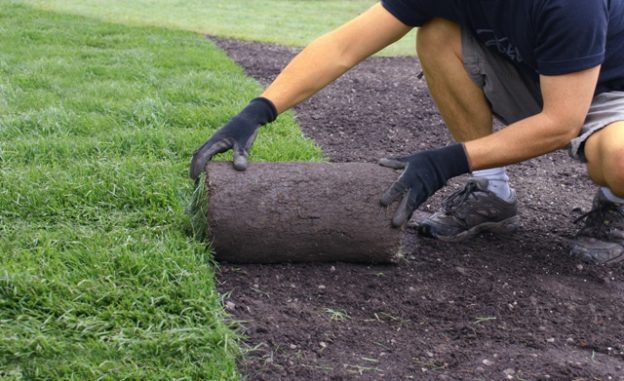
Fresh turf being laid on the lawn.

Getting the lawn ready for summer

Getting the lawn ready for summer- lawn care tips

Lawn care in May

A pristine lawn

A lovely looking, well kept lawn is a great feature in the garden.

Now we are firmly on the way to summer and safely (we hope) out of the frosts; May is the month to get the lawn ready for its summer glory. If the weather scuppered your lawn care last month, there is still plenty of time to fertilise the lawn and apply a high quality spring lawn feed (we have some suitable feeds for sale in both our Exeter garden centres).

Now is also the time to repair any lawn bald patches, edges and thin areas. Repairing these patches will not only make a huge difference to the eye, but it will help lawn health and reduce weed germination. To repair patches either sow seed or buy some turf. For optimum growth and recovery do this before the end of the month. For an all over patchy or sparse lawn it may be advisable to look at fully re-laying the lawn or starting a complete lawn maintenance programme. We have a great selection of turf in our stores, and our experts will be able to advise you on which turf is best for you and how to care for it.

Routine care

Regular lawn mowing is a must, with several health benefits for the grass. How much and how regularly you cut the lawn depends on what work you have done to it recently. For freshly sown lawns or meadows of wildflower, we recommend to wait roughly six weeks after sowing before mowing.

Aeration

Another technique that you can now start to incorporate into your lawn maintenance is aeration. Although it is too late in the year to begin slitting the lawn, it is a great time to use some kind of aerator, be it special studded sandals or a rolling aerator. Aeration can in fact enable the lawn to use rain showers more efficiently and prevent water logging; it can also keep the grass nice and green for longer. If this is too much of a job on your lawn, it could be useful to simply aerate the areas that get a lot of use, such as a pathway, with a garden fork.


Potatoes- what on earth?

Potatoes – what on earth?

We often hear the phrase ‘Earthing up’ whilst speaking about potatoes, especially around this time of the year. It is much simpler and more useful than it may sound!

Earthing up

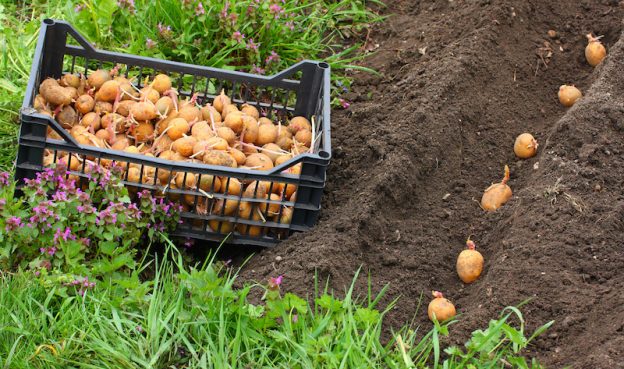
Earthing up or ridging as it is sometimes known, is simply drawing up soil into a ridge above the row of planted potatoes. You can do this as soon as foliage emerges above the surface.

Why?

  •  it protects the early foliage from any frost damage.
  •  it blocks light from reaching the tubers which can have the adverse effect of turning the tubers green and making them inedible. To make sure this is always happening, we recommend earthing up in stages.
  • finally, the piled up soil can help to lock in moisture which allows the tubers to ‘swell’ and grow.

 For container potatoes

Maybe you have decided to grow potatoes in sacks or containers, if so the process of earthing up still applies- simply add layers of compost in stages as the stems begin to grow. Carry on until you reach the top of the container. A good heap of about 8 inches / 20-cm should be enough.

Don’t rush

After all your efforts with earthing up, don’t give in to the temptation of harvesting your crops too early. For early potatoes be sure to wait until the flowers are completely out and for the main crop variety you can hold back until the foliage begins to turn yellow.


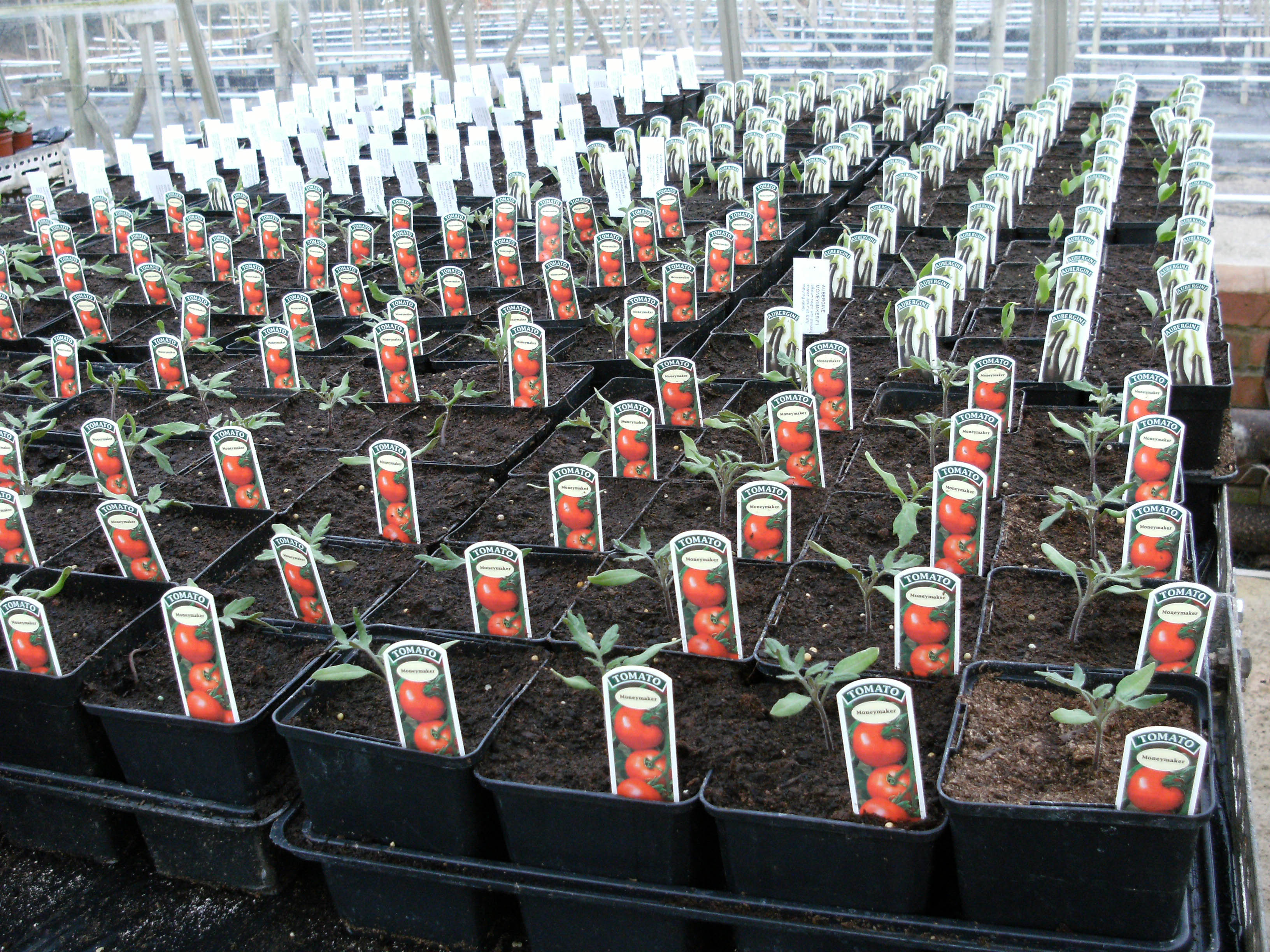
Rows of tomato seeds being grown into tomato plants for sale in the garden centres.

Time for tomatoes

Tomatoes – tips for your best harvest yet

Tropical Tomatoes

Rows of tomato seeds being grown into tomato plants for sale in the garden centres.

Tomatoes being grown in the nurseries

Originally from South America, tomatoes tend to prefer a warmer climate and suffer when the temperatures drop below 10°C. Consequently, take care not to plant your tomatoes outdoors too early. This will prevent a number of problems such as catfacing (malformation and scarring of the fruit), brown leaf spots and leaf curling. A tomato plant can usually survive these issues and recover in the warmth. However, if it was a surprise frost that caught your tomatoes then the damage is usually permanent and it is best to start over.

Getting the best results from your tomato plants

For best results we recommend covering the tomatoes until you are sure that the weather will be warm enough. A great indicator for this is usually when the temperature remains above 10°C overnight, so buy yourself an outdoor thermometer to check when you next pop in to one of our garden centres.  Next, choose the warmest spot possible in your garden. Ideally keep your tomato plants in a greenhouse or plastic grow-house. Make sure that the spot is also aerated and a fair distance from your potatoes because blight can travel and flourishes in humid conditions. Another option to try out is planting your tomatoes in pots in the sunniest part of your terrace or balcony for great fruit and decoration!

After planting;

  •  Stake or cage all your plants (except if you are growing trailing varieties in a basket or small bush types).
  • Tie the main stem to a vertical bamboo cane (again not for bush or hanging basket types).
  • Remove side-shoots regularly- when they get to about 2.5cm long (again not for hanging basket types).
  • Water consistently– tomatoes grow most successfully when they have consistent moisture. With all watery fruit (like berries) you will get bigger juicier ones with lots of watering. To avoid diseases do not water the foliage but instead aim your water straight onto the root zones and the compost. Irregular watering is the cause of many common problems including cracked fruit and blossom end rot.
  • Remove the growing point of the main stem two leaves above the top truss (stem with small green fruits). This should be done once your vine tomato has grown to have seven trusses if grown indoors, or four trusses if grown outside.

Feeding

Feeding tomatoes should start after the first truss (stem with small green fruits) has set in. We recommend the product Tomorite as it has been a gardener’s friend for decades. It is ideal for other plants too including flowering plants due to the high potash content. It contains seaweed extract which supplies many micro-nutrients and produces full flavoured tomatoes. Outdoors you feed every 7 days, in a greenhouse feed twice a week.

Harvesting

Start picking when fruit is ripe and fully coloured. At the end of the growing season if you have some green tomatoes still on the plant, we recommend this delicious green tomato chutney recipe.

Varieties to choose from

We sell numerous tomato varieties throughout the growing season available in batches as they are ready from the greenhouses. Without a doubt our top selling varieties year on year are;

Gardeners Delight: a flavoursome cherry tomato known for heavy crops and great to grow in tomato bags or pots.

Shirley: an early maturing tomato that is known for heavy crops and also shows excellent disease resistance. Ideal for growing in a growbag or as a greenhouse cordon.

Moneymaker: grown as a cordon (vine) this variety produces smooth, medium salad tomato sized fruit that are delicious in flavour.

Fun Fact

Tomatoes are often treated as a vegetable in cooking and in deed our classification on the garden centre beds. However, the tomato is actually a fruit since its seeds are inside.

New radio advert- your favourite garden tasks

Our new radio advert

For our radio adverts this year, we want to know YOUR favourite and least favourite aspects of gardening. Asking around proved hugely entertaining and comforted us with the knowledge that here at St Bridget Nurseries we can often alleviate the pain of your most dreaded gardening tasks!

Listen here

Listen to our radio advert here, or tune in to Heart Radio Exeter to hear it live!

Plomping

Our conversation with this delightful lady introduced us to an unusual least favourite task; planting and ‘plomping ‘ the plants in. Whilst we searched high and low for the meaning of ‘plomping’ all we could find was a non-dictionary definition ‘to plomp’ as to sit down after a long and exhausting day. Despite no mention of planting, or in fact proof that the word exists, we have keenly adopted the word ‘plomping’. It is already a firm favourite in our St Bridget garden dictionary!

Tammy’s favourite jobs

We also asked Tammy, our managing director, to share her most and least loved jobs in the garden.

Although Tammy really shouldn’t have favourites, when asked she replied this;

“Dead heading flowers is my favourite job, I find it so therapeutic and great for stress relief. My least favourite is definitely forking into heavy and hard clay soil, I always shout for help when it comes to that job!”

What about you?

We’d love to hear what you love and hate doing in the garden, let us know on our FaceBook page by using our brand new hashtag #welovegardening.

For all those jobs you don’t love like “bending over and plomping” in the plants, our garden centre teams can help you find something to make these jobs a little more lovable!

Will you find our lucky clover bargains this St Patrick's Day?

Find the lucky clovers

Saturday 17th March is St Patrick’s Day and we love all things green. Our Sidmouth Road team have turned into Leprechauns and discounted lots of items across the store.

Find the bargain

Can you find the lucky clovers? Find the clover, find the bargain. Clovers are hidden around our garden centre. In addition, we will have

25% off all bulbs

25% of all seed potatoes and

25% off selected watering cans.

St Patrick’s Day menu

There will also be a special Irish menu in our 1925 Kitchen. Choose from either a

St Patrick’s Beef & Guinness Stew at £7.95 or

Homemade Leek and Potato Soup with fresh baked roll and Irish butter £4.50

This event is taking place at our Sidmouth Road, Clyst St Mary garden centre, Exeter on Saturday 17th March 2018.

Creating a wildlife pond

How to create a Wildlife Pond

by Grant Barker, Aquatic Department Supervisor, St Bridget Nurseries, Sidmouth Road, Clyst St Mary, Exeter.

Wildlife ponds as the name suggests should attract wildlife as well as becoming a long term home for a variety of aquatic species such as amphibians. It is also customary to use exclusively native species of Aquatic and Bog plants throughout the pond to continue the “wild” theme. Wildlife does not distinguish between naturally occurring and man-made ponds, so in theory a well-placed stone trough will soon become home to various aquatic larvae, frogs as well as becoming a welcome water source for birds.

Planning the shape and size of your pond

The important thing with all wildlife ponds is ensuring you give amphibians something they can climb up on for example gentle sloping sides to your pond or a ramp such as a branch. Man made wildlife ponds are typically dug into the ground and have gentle sloping sides all the way round between 10-20 degrees sloping to a depth of at least 45cm (18”). The depth will protect aquatic life living in the pond from the cold during the winter period. Based on these required measurements, purpose built wildlife ponds tend to be quite large with an approximate diameter of 6 metres (20ft) depending on how big the deep area is in the centre of the pond. It is possible to build a smaller pond, but to achieve the minimum required depth of 45cm (18”) the sides will need to be more steeply sloped and so you will need to thinking carefully about planting and provide a ramp for wildlife.

Keeping the water in

Once you have dug your hole it is time to decide how you will make it “hold water”. The two most common ways of doing this are either using large amounts of clay on the bottom or using a liner. The pond liner is by far the easier option and can be purchased relatively cheaply. It is also important when lining the pond to have a good layer of sand and ideally an underlay felt in place before the liner is installed to protect the liner from any stones or sharp edges that could pierce it.

Once the pond is filled, it is generally advisable to add a water conditioner if the pond has been filled with tap water, as this this will help remove any chlorine and heavy metals that could be harmful to wildlife. Remember to add this again when you top the pond up in the summer months due to evaporation. Although not essential for a wildlife pond, having a small area of moving water will help keep the water healthy by oxygenating it. This can be achieved by either building a waterfall or a small pond air pump. The former is more in keeping with the theme and continues the illusion of a pond that is “wild” whilst an air pump gives the effect of bubbles rising from the bottom of the pond.

Plant choice

Plant your pond using native plants and avoid the introduction of more invasive species. Around the shallow edge of the pond, various species of marginal plants can be placed such as Marsh Marigolds and Cotton Grass. For the deeper sections use of deep water marginal plants. Oxygenating plants and water lilies will offer large amounts of cover for wildlife from the sun and potential predators.

Do you want fish?

The Key to success is compromise; a wildlife pond is not a fish pond, so adding lots of fish is not possible as the environment will not sustain them. One of the interesting things about a wildlife pond, is that you have to look carefully to try and see the creatures living in it. Unlike a fish pond where the fish are easily seen, there is a sense of mystery to a wildlife pond – what might be living beneath the surface! However, if you do want to add some fish, the addition of a small group of 6-8 stickleback or river minnows will not impact the pond greatly. A waterfall would be a must though as these species need high levels of oxygen. The main argument for not including fish is that they can be destructive in terms of nibbling plants and eating larvae. Fish also generate waste, which over time will impact the water chemistry and could lead to algae problems.

This article was include in the March/April edition of the Landsman magazine and can be found on page 43 here 

Our aquatics team (at St Bridget’s Sidmouth Road, Clyst St Mary garden centre) are pleased to help advise you further. We have everything you need to make the perfect pond. Call 01392 876281.

Our friendly aquatics team will be pleased to help you.

A St Bridget Nurseries Camellia is presented to HRH Sophie Countess of Wessex.

Countess of Wessex receives St Bridget Grown Camellia.

HRH The Countess of Wessex  made her final visit as President of the Devon County Agricultural Association (DCAA) to Westpoint, Exeter on Friday (January 19, 2018).

Ollie Allen, Secretary of the Devon County Show, presented HRH Sophie the Countess of Wessex, with a beautiful St Bridget Nurseries home grown Camellia.

A full write up on the final visit can be read here.